


Demandbase is a full-stack account-based marketing (ABM) platform packed with features.
But so is its pricing.
From user reviews and my own experience, one thing is clear: Demandbase is too expensive for most small businesses trying to engage high-value accounts and target accounts without bloating the tech stack.
Vendr says the median price is about $65,000 per year. 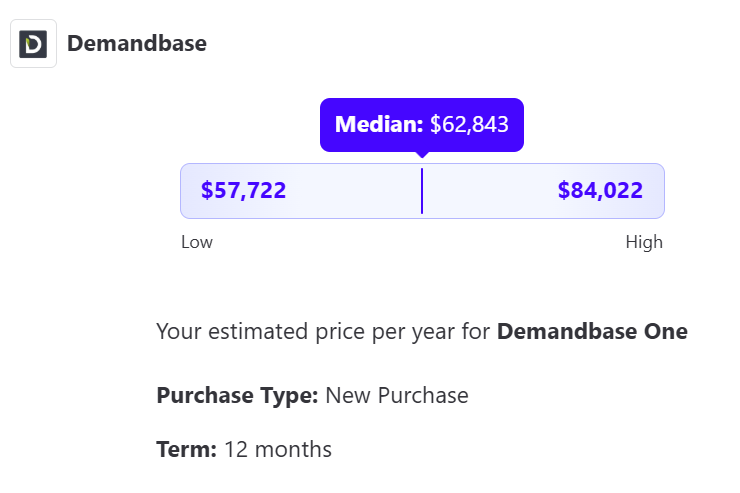
Also, it ain’t expensive just because of the absolute number, but because many SMBs won’t use the vast array of features across multiple tools and outreach campaigns (it’s often overkill).
In this article, I break down not just the sticker Demandbase pricing, but also scenario-based cost estimations, hidden costs, and whether it’s the right fit for you (and will suggest a leaner alternative too: ZenABM).
Note: Demandbase doesn’t list pricing on its site. The info here comes from third-party sources.
Let’s go!
Demandbase’s module called Demandbase One is sold as an all-in-one Account-Based Go-To-Market platform with multiple capabilities (analytics, intent data, advertising, personalization, sales intelligence, etc.). Demandbase One supports account intelligence and user engagement analysis that track engagement across the customer journey for key decision makers at target accounts.
Unlike many SaaS products with pre-set tiers, Demandbase follows a “custom package” enterprise pricing model designed for marketing and sales teams.
Here’s what that means in practice:
You won’t find a pricing table on Demandbase’s site with clear tiers. Instead, you are expected to contact their sales team for a personalized quote on Demandbase One that reflects account behavior and the modules required.

Demandbase confirms that its pricing has two main components:
So, you pay a base rate for the platform, then your cost scales up with the number of Sales/Marketing users who will access it in the Demandbase One environment.
So, larger teams will pay significantly more.
That’s a classic case of user-based fee overages within Demandbase One.
Demandbase One is pitched as a unified platform for Sales & Marketing, and overall ABM; they don’t like to split it up. Demandbase One can unify data from marketing activities and contact data to produce AI driven insights and actionable intelligence.

In reality, the product has distinct modules (from acquisitions like Engagio, InsideView, etc.), and many customers do effectively purchase subsets.
For instance, Demandbase also sells its Advertising Cloud as a standalone entry point or its Data Cloud solutions separately that focus on account intelligence and sales intelligence.
But if you go with the full Demandbase One suite, expect a big bundle and a big price.
Some organizations negotiate for only the pieces they need (e.g. maybe just the ads and intent data, or just the ABM analytics) to control costs and keep the tech stack compact.
Demandbase’s sales approach is to “personalizd a plan that fits all your GTM teams’ needs.”, which in many cases means combining multiple modules inside Demandbase One.
But remember, even smaller modules in Demandbase are feature-heavy and pricey.
Because of the custom nature, Demandbase One’s cost can vary wildly.
However, multiple sources provide some known pricing benchmarks:
A 2025 analysis of pricing data from Vendr and user forums shows that small businesses (~200 employees) can expect $18K–$32K/year for a limited package of Demandbase One.
Mid-market firms (~1,000 employees) usually spend $43K–$61K/year, while large enterprises often exceed $100K/year, with $108K+ not uncommon. Vendr reports a median of ~$65K/year for Demandbase One.
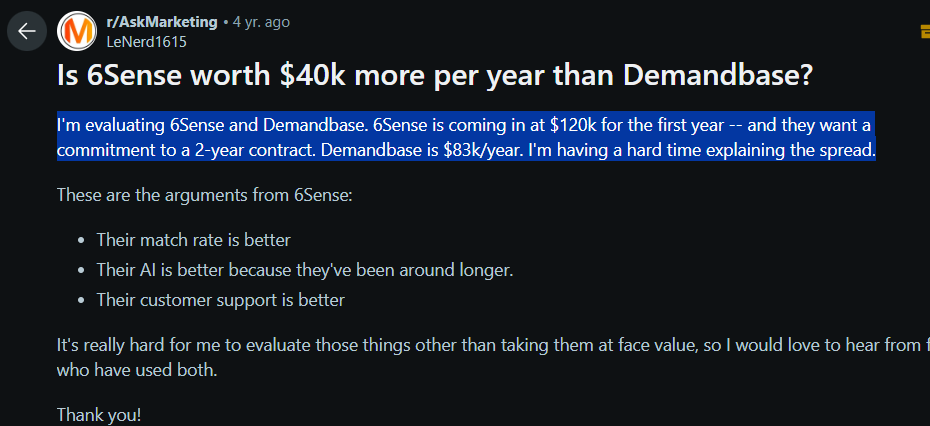
One Reddit user, for instance, claimed $83k was the quote they received:
From a ‘type of features’ POV, fullenrich blog states that Demandbase starts at $24K and offers basic ABM capabilities, limited intent data, and somewhat restricted integrations, while the professional tier with advanced intent data, personalized advertising, and integrations with major CRM/MAPs is about $60K. These tiers sit inside Demandbase One and are often positioned as key capabilities for account based marketing.
Again, these are base prices excluding user-based and data-based overages.
At the very top end, Demandbase can cost a few hundred thousand dollars per year.
Nolan Clemmons, a martech consultant, estimates “anywhere from $70,000 up to $300,000 USD at the enterprise level” for Demandbase One.
Note: Almost all Demandbase contracts are annual (or multi-year) commitments. Nothing new for enterprise tech, though.
Apart from whole price benchmarks, some sources also talk about add-ons and hidden costs like overages.

Demandbase One is actually an amalgam of several products (the result of acquisitions and feature expansions).
The core ABM platform, sometimes referred to as “ABX Cloud” or Engagement Cloud, is the heart of it, covering account identification, engagement analytics, and some intent data within Demandbase One. It helps track engagement across the customer journey and provides AI driven insights.
This was cited at ~$45K/year for 10 users as a base platform fee (Clemmons.io).
But many valuable features are add-ons on top of that:
| Module | Description | Approx. Cost | Notes |
|---|---|---|---|
| Advertising Cloud | Targeted display ads for account lists | $30K/year | License only; ad spend extra. Premium CPM vs Google Analytics audiences or native channels. Useful for targeted advertising to potential customers. |
| Orchestration Module | Advanced workflow automation, sales alerts | $20K/year | Helps coordinate ABM between marketing & sales, aligns outreach campaigns, supports account intelligence. |
| Personalization Module | Website personalization by account/segment | $30K/year | Dynamic content tailored per visitor/company to guide the customer journey and improve user engagement. |
| Sales Intelligence (Data Cloud) | Contact & account data (post-InsideView) | Variable | May require extra for third-party intent data (Bombora, G2). Expands contact data and account intelligence. |
| Data Stream | Raw data export to BI tools/data warehouse | $30K/year | Hidden cost; without it, stuck with native UI/reports. Needed if you want actionable intelligence in external BI and seamless integrations with your tech stack. |
Demandbase often charges professional services fees for implementation and training, essentially an onboarding package.
One source noted “implementation, support, and services” was priced around $29K for their contract.
This means the price you’re quoted for the software modules might not be the only thing you pay.
Always ask if onboarding services are included or billed separately, and how Demandbase One will integrate with Google Analytics events and your broader tech stack.
As mentioned, a contract will include a certain number of user licenses.
Demandbase’s ABX Cloud included 10 users in the base price in the example above.
If your sales and marketing org has more people that need access, you’ll pay a per-user fee for each additional seat.
While the exact dollar amount per user isn’t clear, other ABM platforms charge on the order of a few hundred dollars per user per year. It’s enough that, for instance, expanding from 10 users to 20 users could add a few thousand (or more) to your annual cost, especially if multiple tools are connected to Demandbase One.
Demandbase pricing can scale with account volume or data usage, even though it’s framed as an unlimited platform fee.
Unlike 6sense or Factors.ai, Demandbase doesn’t advertise account limits, but very large lists or heavy traffic may push you into higher tiers.
It’s not classic overage billing, but if your ABM scope expands to more accounts, regions, or data, expect your renewal cost to rise accordingly as Demandbase One processes more account behavior and website visitors.
Another way to gauge an ABM tool’s cost is to see how much certain tasks like web-visitor deanonymization will cost.
To identify ~10,000 anonymous site visitors, you’ll need Demandbase’s Engagement/ABX platform with its visitor-ID and web analytics features typically bundled in a ~$60K/year package inside Demandbase One.
But beware: accuracy is limited.
Many visitors can’t be matched due to VPNs or shared IPs, so you may pay for “matches” that are partial or wrong.
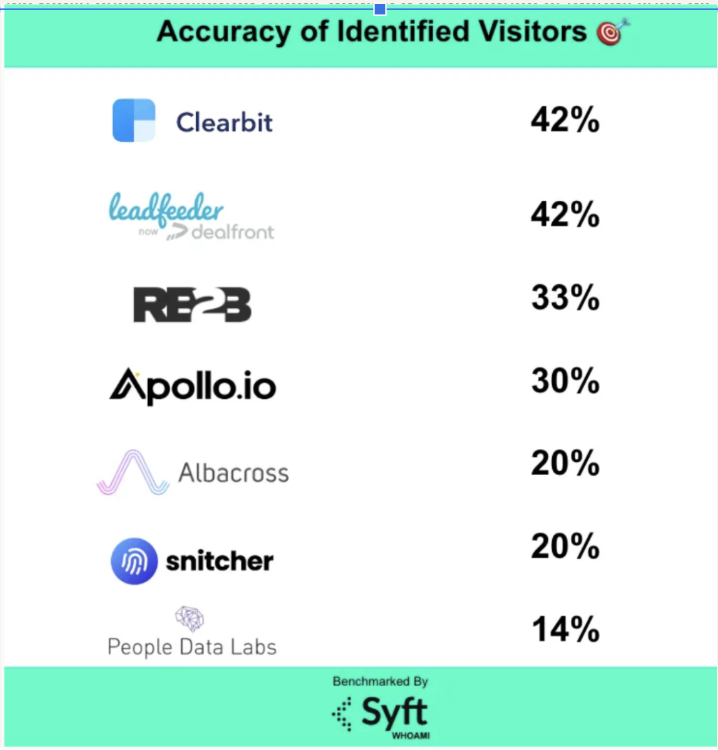
In fact, a Syft study found that IP-based web visitor deanonymization tools’ accuracy tops at a mere 42% only, which means vanity metrics can creep in if you are not careful with interpreting user engagement.
Plus, setup requires script integration and careful account list configuration, adding to the hidden costs and potential network security reviews.
Pro Tip: Ditch third-party IP matching and use ZenABM, which pulls first-party LinkedIn data from the official API. That means if someone from Acme Corp clicks your LinkedIn ad, you’re not guessing their company, LinkedIn confirms it. The result is a near-100% reliable account identification for engaged visitors, completely bypassing IP reverse-lookup errors, and it helps track engagement cleanly.
Personalizing web content for 5,000 accounts with Demandbase requires its personalization engine, usually part of the Engagement/ABX platform (~$35K/year as a standalone module or $30K–$60K/year within broader bundles like ABX Digital).
While the tech identifies accounts and serves dynamic content, the hidden cost is on your team: creating all the copy, banners, and variants for different segments across the customer journey. These internal costs must not be ignored (have discussed more about this in a later section).
Running a retargeting campaign for ~1,000 accounts through Demandbase Advertising Cloud comes with a steep price.
It requires the Advertising Cloud module, either standalone or bundled (e.g., the Ads & Orchestration package cited at ~$60K/year).
Without it, the core platform can’t execute ABM retargeting.
Hidden costs are also significant:
Internal costs are one of the most overlooked parameters, but they shouldn’t be so, especially for Demandbase One.
Demandbase One is a complex ecosystem.
You’ll need team members with the time and skill to fully utilize it.
Smaller organizations often underestimate the learning curve and ongoing management that Demandbase One requires.
If it takes 6 months to implement and a dedicated ops person to run, that’s a real cost (in salary and lost agility) beyond the subscription fee.
And if you don’t have the time, human resources, etc., to utilize the platform, it’ll be another fancy-tool-that-didn’t-help kind of blow to your marketing budget.
Given the sizeable investment, you must know how actual customers feel about demandbase pricing and ROI.
The consensus from forums and review sites can be summarized in two words:
“Expensive, but…” expensive for sure, but potentially worth it if you’re the right fit with Demandbase One.
Here are some representative voices and sentiments:
Many marketers balk at the price.
On Reddit, one called Demandbase’s ads “sooooo expensive,” saying its intent data “can be purchased for a fraction elsewhere.”

They argued, “You don’t need a hefty platform to do this stuff”, urging others to use smaller tools or buy data directly.
This reflects a common view: Demandbase doesn’t always justify its premium, especially for teams able to stitch together ABM workflows with cheaper solutions in their tech stack.
Enterprise users, however, often defend the cost.
They admit the “premium pricing,” but say Demandbase’s targeting and personalization drive efficiency and conversions for potential customers and high value accounts.
Marketers chasing ad results often cite cost issues.
Demandbase ads deliver precision but at premium CPMs.
On top of ad spend, there’s a platform fee.
Some also report that Demandbase’s CPMs are far higher than standard channels.
A subtle theme in discussions is that some teams buy Demandbase but fail to get full value.
As one Reddit commenter offered, after investing in Demandbase or 6sense, many marketing teams are still struggling to get the max ROI out of those platforms.

It’s a sophisticated solution.
If you’re not prepared to commit significant effort, you might end up using just 20-30% of its capabilities, which makes the high price tag sting even more.
Choosing an ABM platform is a strategic call, and cost feasibility is key.
Based on pricing and user feedback, here’s a framework to see if Demandbase One is your ABM fit
Good Fit If:
Not a Fit If:
While Demandbase takes an enterprise, all-in-one approach with heavy pricing, ZenABM offers a lighter, LinkedIn-first alternative for teams who want predictable pricing and first-party engagement data instead of third-party intent guesses.
Here’s what ZenABM brings to the table:
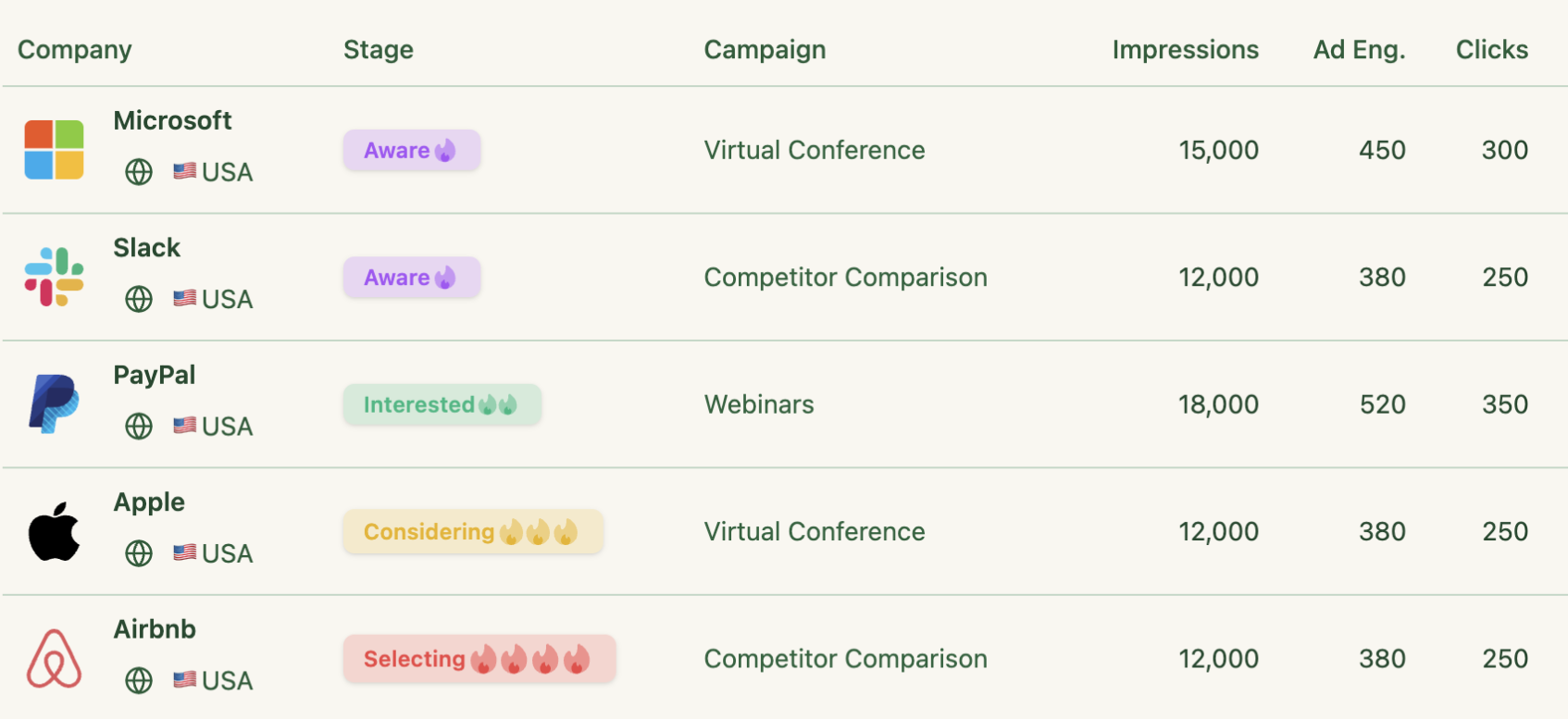
ZenABM pulls company level LinkedIn ad engagement data (impressions, clicks, and engagements) and ad spend for each of your LinkedIn ad campaigns. This helps marketing teams and sales teams track engagement for target accounts and high-value accounts.
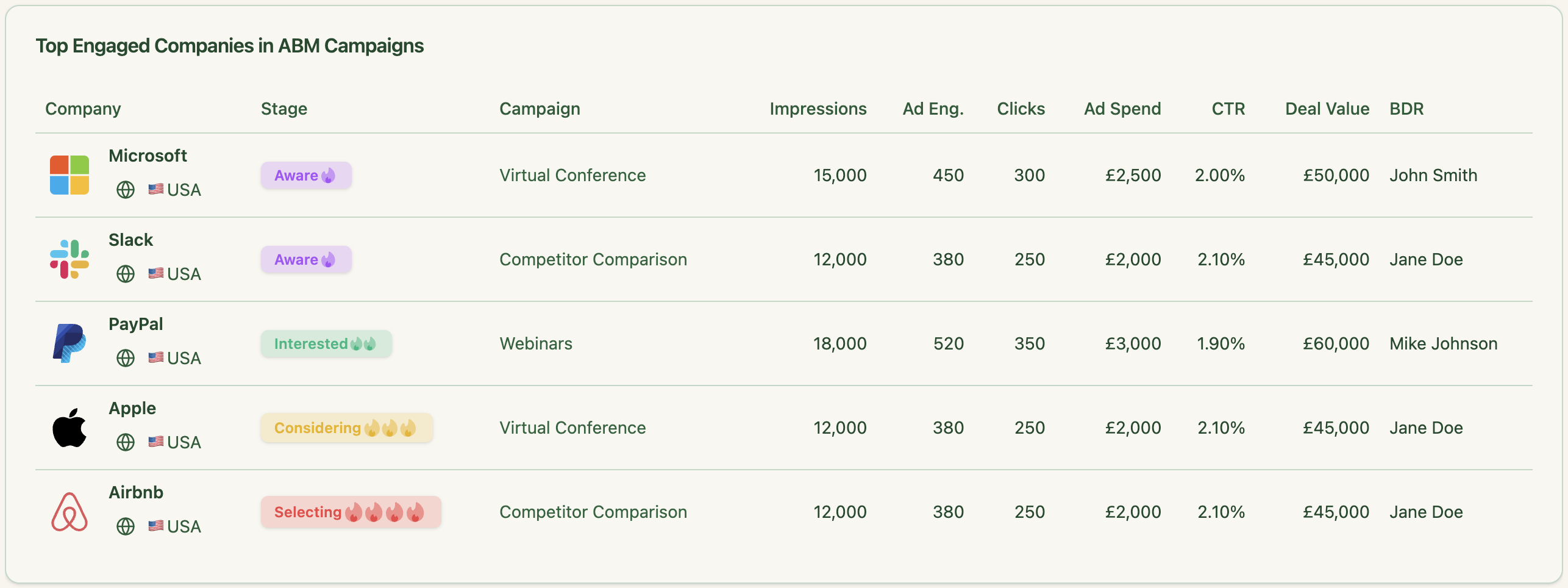
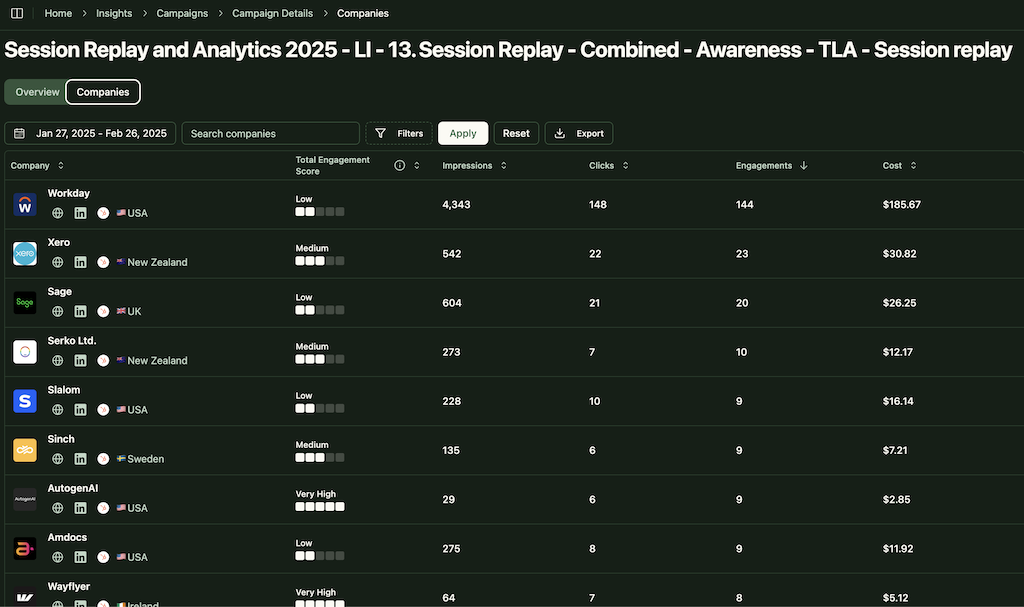
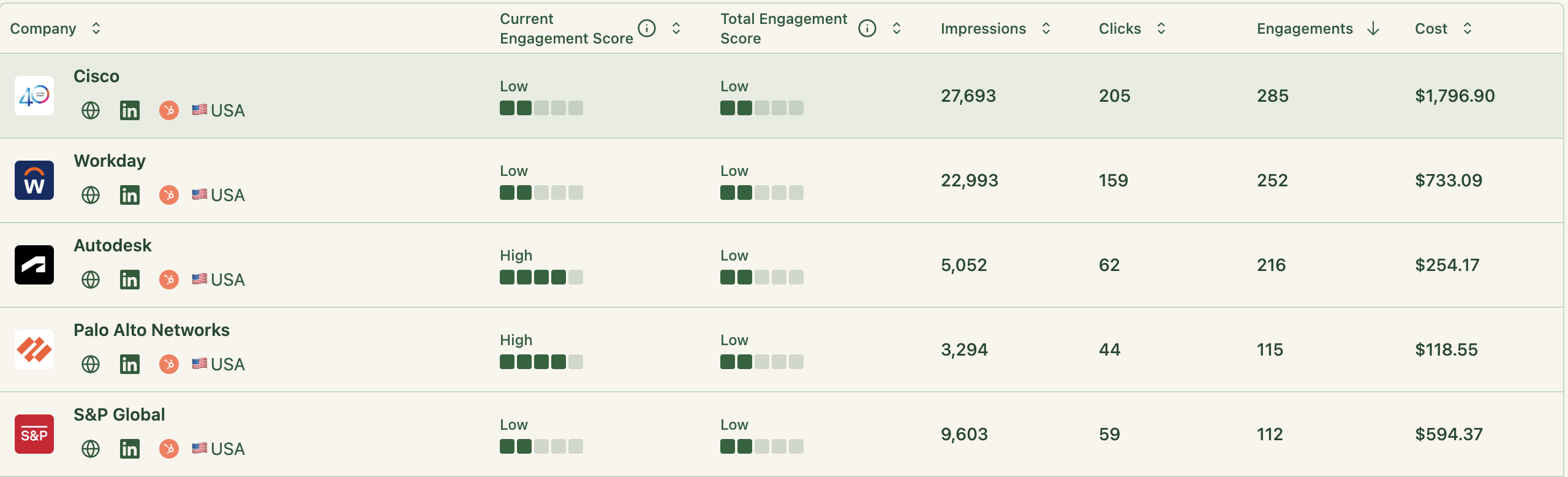
Apart from giving you raw engagement data of each company with each campaign, ZenABM sums up the historic and current engagement rate across campaigns and maps stages of the customer journey.
Plus, based on these engagements and your CRM data, ZenABM assigns an ABM stage to each account, improving account intelligence for outreach campaigns.
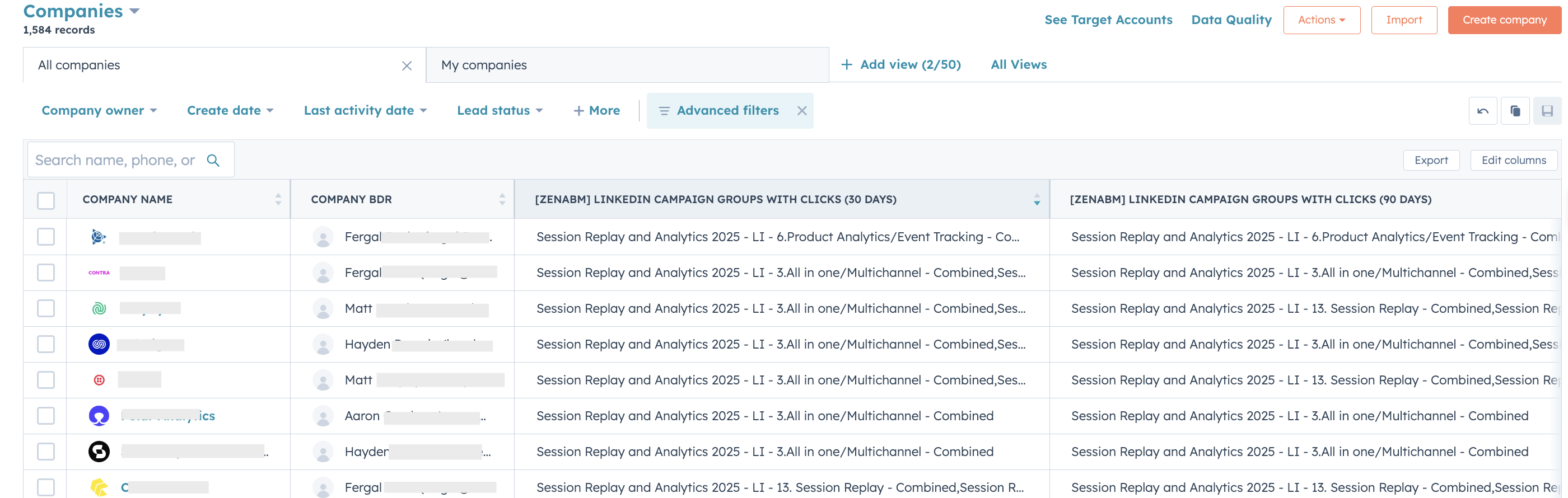
We just saw that ZenABM tracks the ABM stage of each account based on engagement and CRM data.
To add more convenience for your sales team, ZenABM assigns hot accounts to your BDRs in your CRM so outreach efforts are timely and relevant.
ZenABM automatically pushes company properties to your CRM and pulls deal values, giving sales intelligence for actionable intelligence and contact data enrichment.
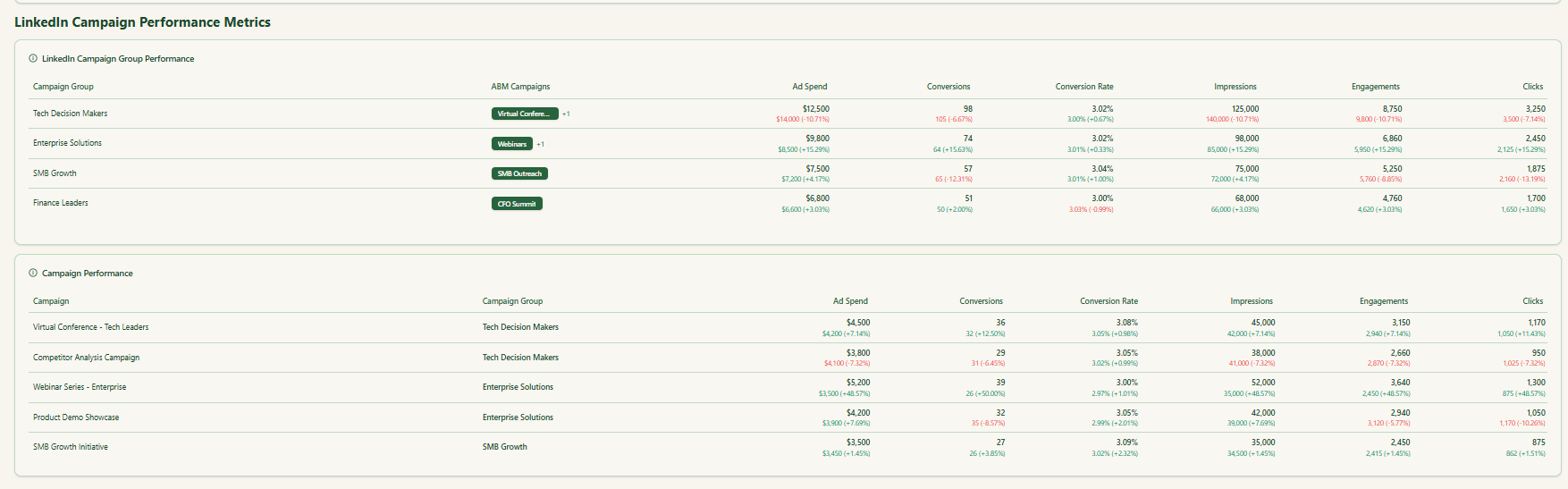
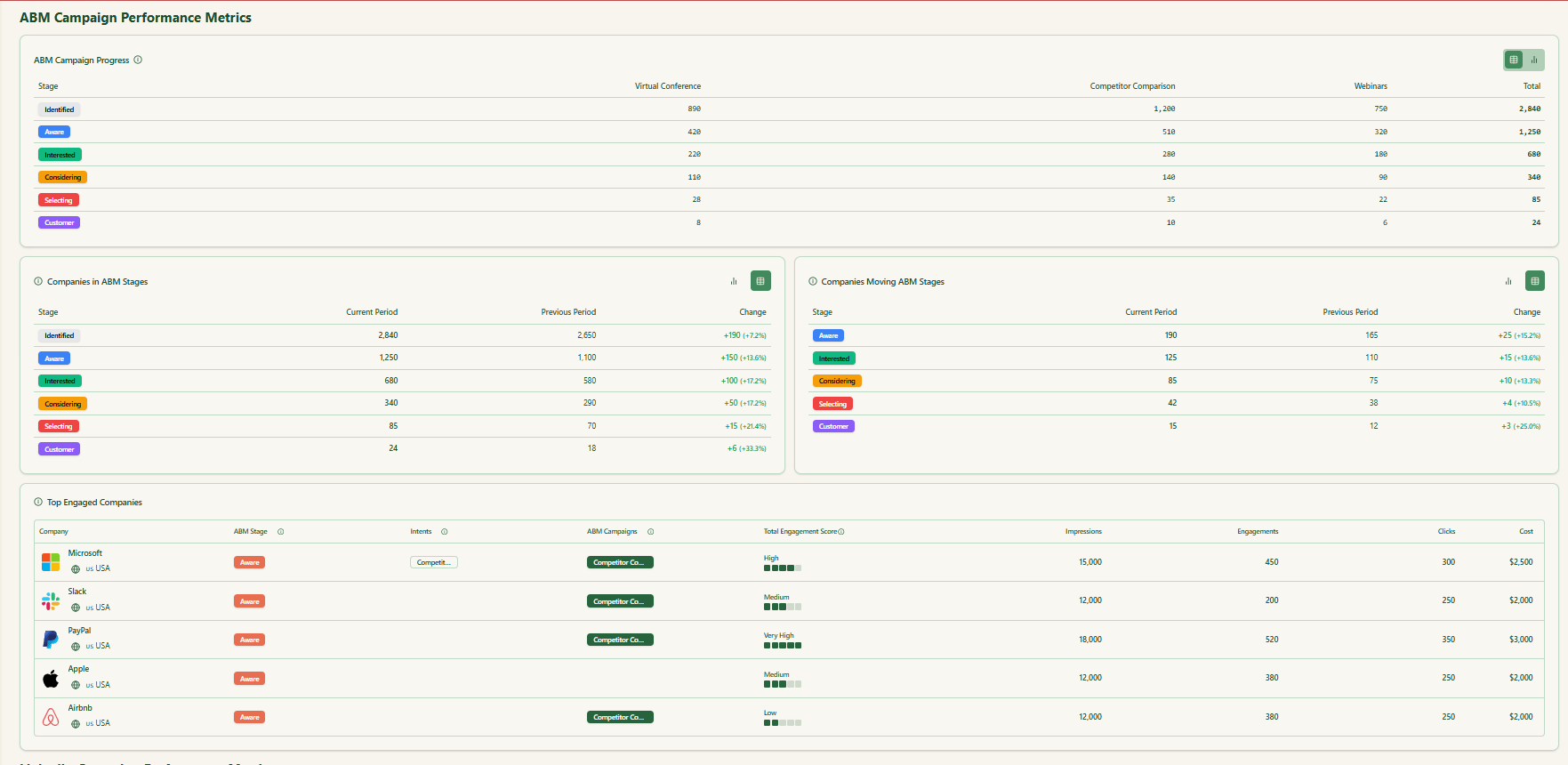
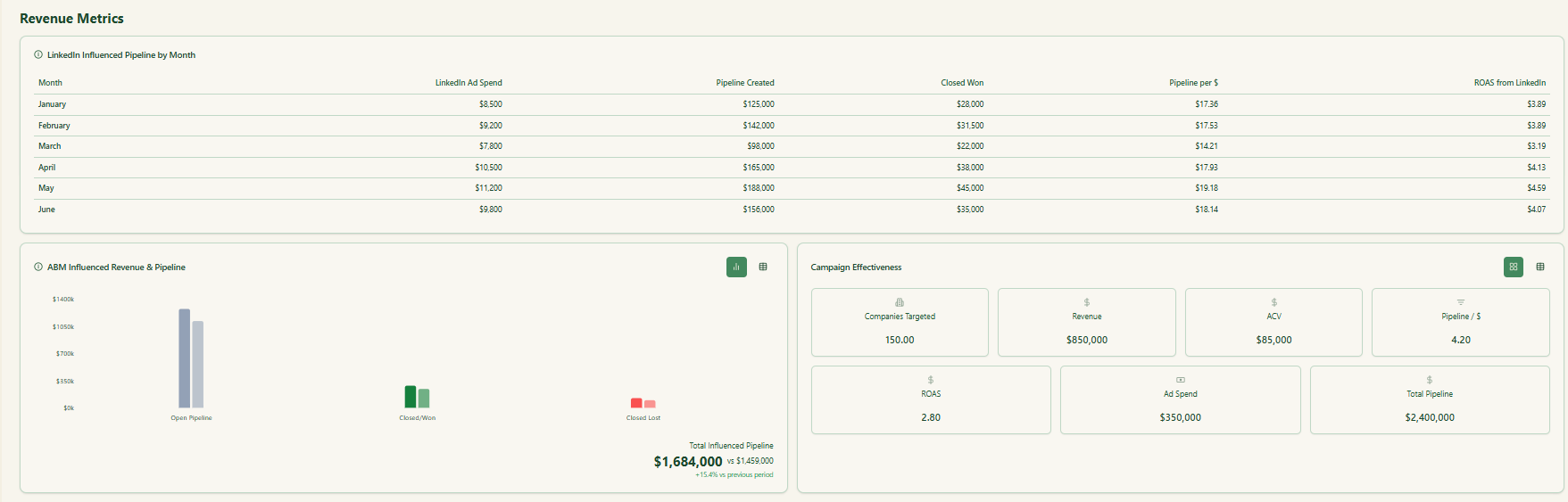
ZenABM provides ABM analytics that help with revenue attribution and AI-driven insights for potential customers who interact with your ads and content.
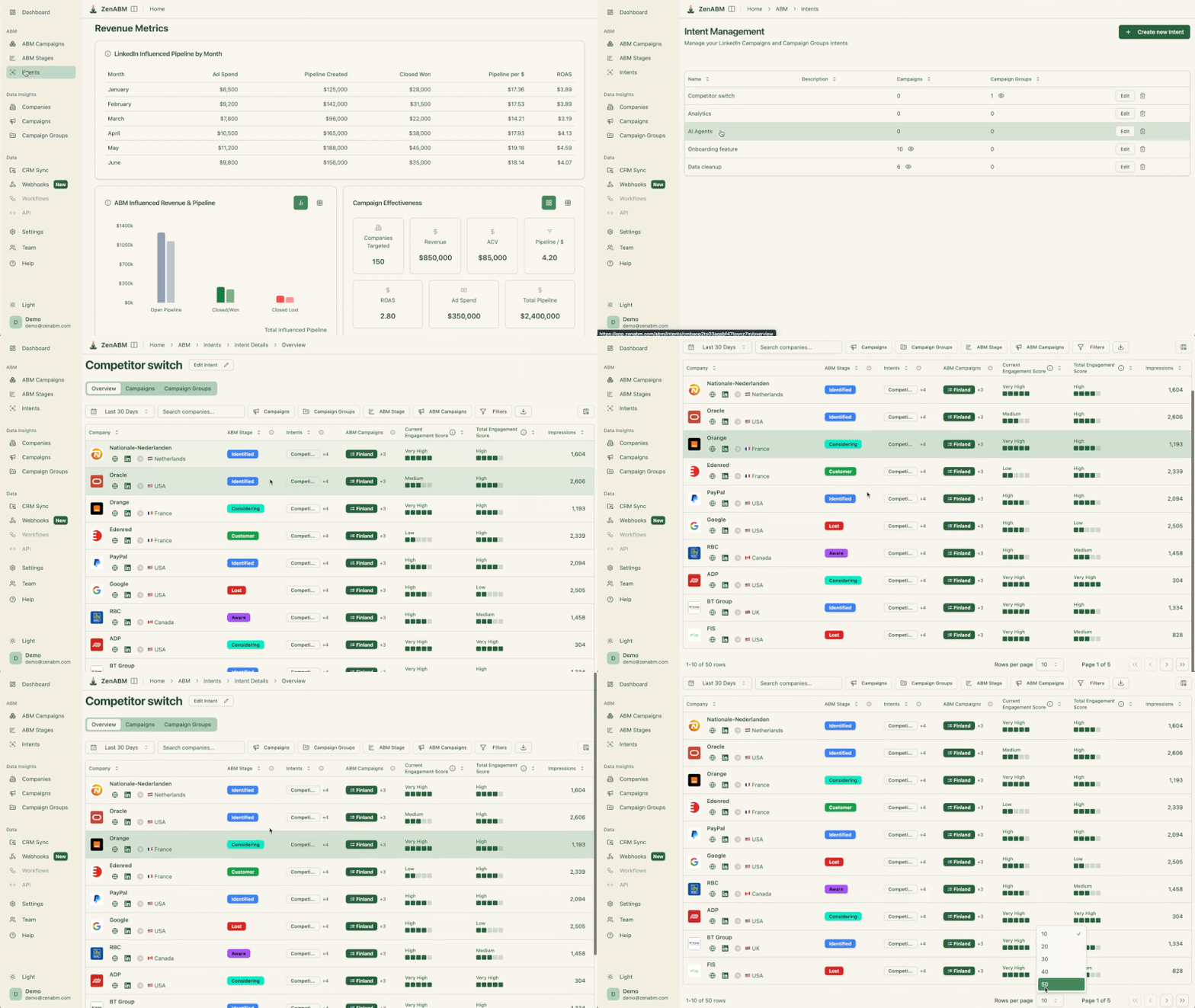
Rather than guessing with third-party data, ZenABM uses first-party signals from ads that reveal qualitative intent, which supports targeted advertising to the right audience segments.
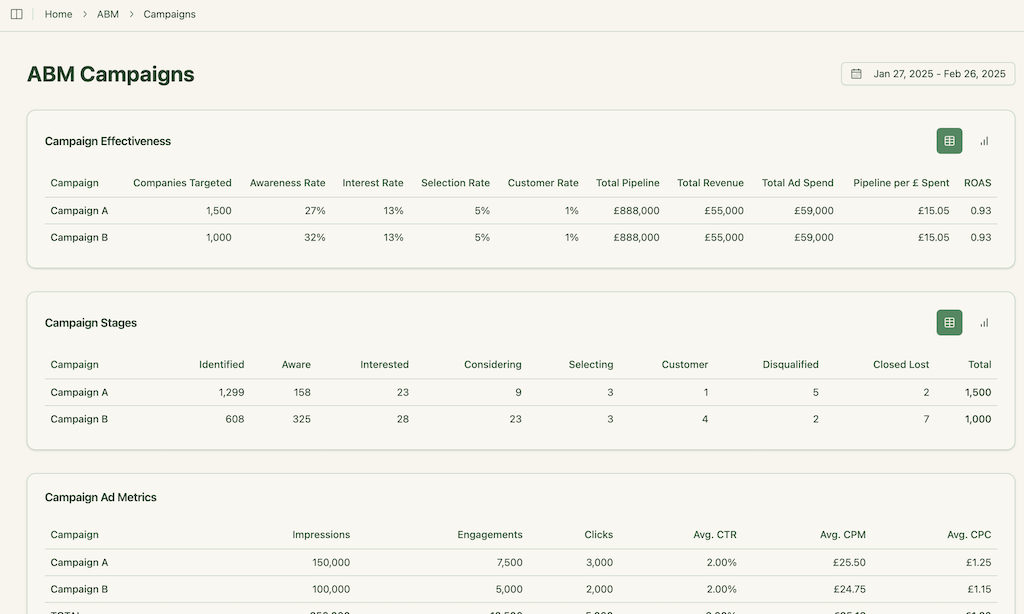
ZenABM shows where accounts stall so marketing teams and sales teams can intervene without chasing vanity metrics.
Demandbase is a powerhouse ABM platform with pricing to match. Demandbase One can work for enterprises focused on account-based marketing and engaging high-value accounts, but it requires budget, process, and discipline.
For startups and SMBs, the combination of platform fees, hidden costs, ad premiums, and the internal lift required makes it a risky bet.
If you’re an enterprise with the budget and maturity to exploit the full suite, Demandbase One can become your ABM command center.
If not, you’re better off with first-party-centric alternatives like ZenABM that prioritize clarity of engagement data, account intelligence, and predictable costs over complexity.