

Enterprise decision-makers, budget-wielding executives, and other VIPs ignore 99% of marketing. They will not move with dry outreach or generic messaging.
In this guide, I break down 6 hands-on account-based marketing tactics that top operators recommend, from using tools to nail your target account list (TAL) to what to do if you are unsure about a prospect’s address for direct mail or gifting, to how to accurately measure and attribute pipeline with ZenABM.
Read on…
The foundation of account based marketing success is choosing the right targets. Your TAL should be tight and centered on target accounts.
Build your ICP with absurd clarity using firmographics, pain points, tech stack, buying signals, and disqualifiers. This is the core of an account based marketing strategy.
Analyze the best customers for patterns, fold in sales input from the sales team, and agree on a shared TAL so marketing teams and sales and marketing teams are aligned.
Use Apollo, Clay, or LinkedIn Sales Navigator to assemble a first-pass list focused on high-value accounts.
Map the DMU early. Most B2B purchases involve multiple stakeholders at target companies. LinkedIn Sales Navigator helps you find them:

You can also use Clay:
acme.com with titles containing VP Marketing or Head of RevOps.”
Use intent signals from Bombora or 6sense, and your own analytics and automation data, to spot “warming” accounts. For deanonymizing visitors to high-intent pages like demo or pricing, run LinkedIn text ads to create cheap awareness, then use ZenABM to see which target accounts accumulated significant impressions so the sales team can prioritize high value accounts.

This is a clever alternative to IP matching, which is not very accurate:
Accounts showing these first-party or third-party signals are the hottest target accounts to pursue with a clear account based marketing strategy.
Add competitors’ customers to your TAL if they fit your ICP. Clay can help:
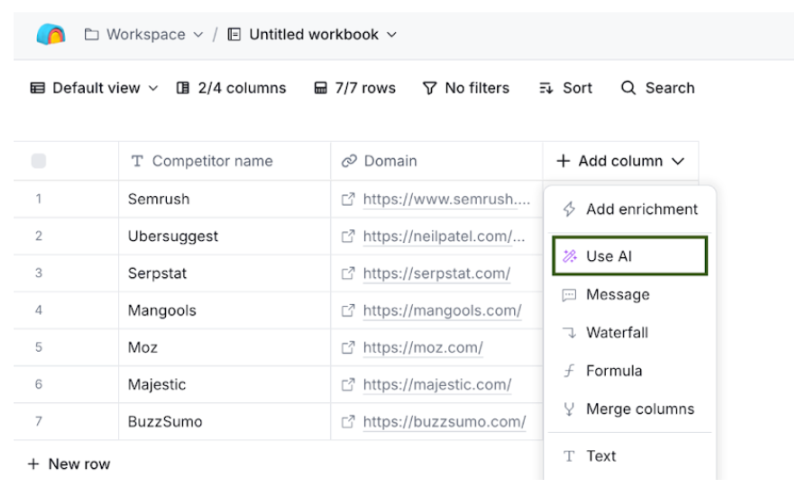
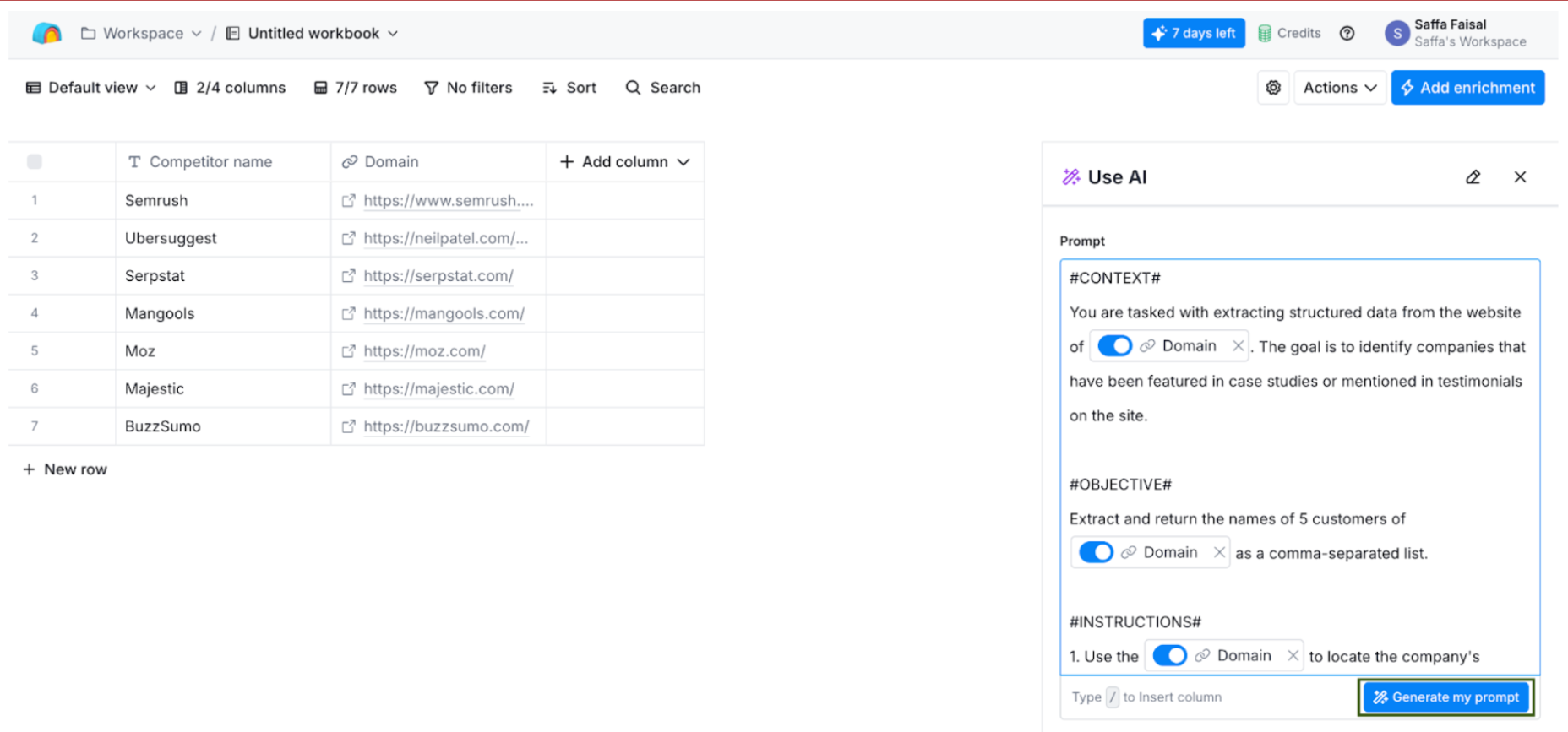
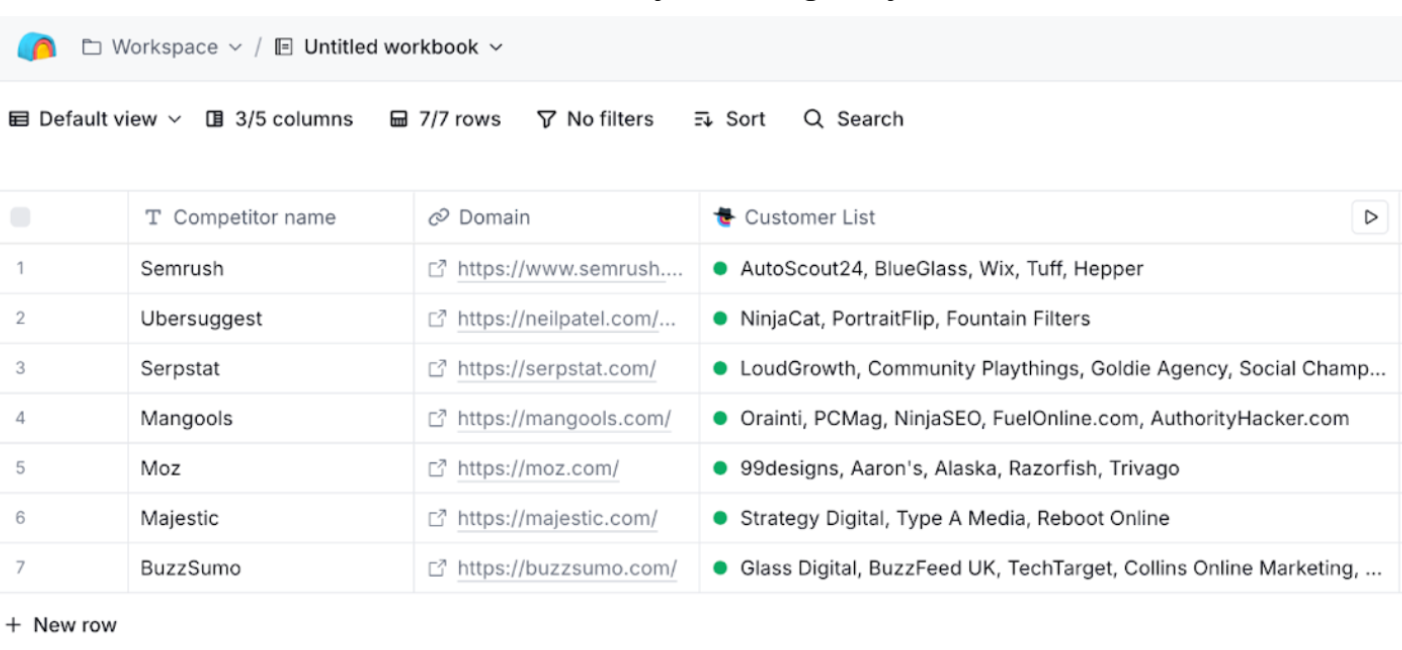 Then enrich key decision-makers and emails for the sales team.
Steven Brady built an account based marketing campaign to reconnect with ex-Square colleagues who matched his ICP. Using LinkedIn Sales Navigator he pulled about 50 first-degree connections, tracked social intent with Trigify, and piped data into Clay for enrichment. Clay added 20 plus attributes per lead for scoring, personalization, routing, and CRM updates that helped the sales team and marketing teams act fast.


Result: Steve called it his most successful ABM campaign ever for high value accounts.
Hard to reach audiences require deep research and tailored messaging. Dig into annual reports, press releases, exec posts, and podcasts to uncover triggers and pain. Build detailed profiles by account and stakeholder to support an account based marketing strategy. GumGum once learned T-Mobile’s CEO loved Batman and created a custom comic:

Use ZenABM to personalize ads and outreach by intent. Tag campaigns by theme or feature and let ZenABM group companies by interest so BDRs can tailor messages to target accounts and key accounts.

Userpilot ran an intent-led approach with persona and stage alignment:

Pro Tip: Try 1 to 1 personalized LinkedIn ads that customize intro text using profile fields like first name, title, company, and industry to reach target accounts faster.
Your buyers are not idling in one channel. Coordinate LinkedIn engagement, InMails, emails, calls, and ads around a shared message and a simple stages model. Have sales and execs follow and comment on prospect posts with real insight, not fluff. Use Message Ads sparingly, then layer in emails and calls. Run LinkedIn ads in parallel and track movement with ZenABM so sales and marketing teams and marketing and sales teams can see progress at target accounts.
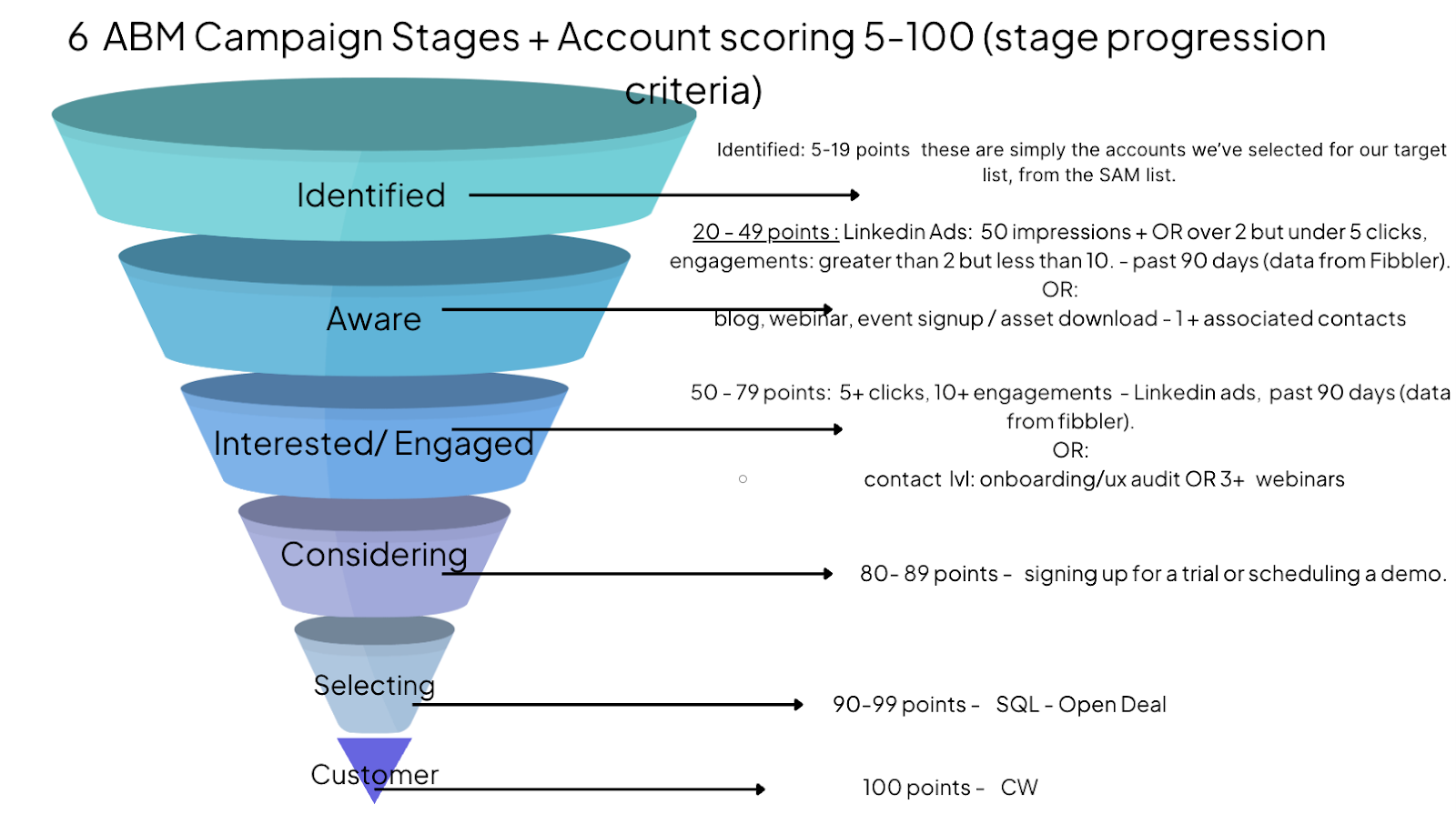
Adopt a stages framework to decide touches and timing. See Kyle Poyar’s model:

Userpilot adapted it like this:
Keep it simple. Track what you can. ZenABM can track stages in-platform:

Validate emails before outreach. In Clay, add an enrichment like ZeroBounce to check deliverability, or use Hunter.io for finding and verification across accounts.


Pro Tip: Add short videos and interactive elements with tools like Mailmodo to improve marketing efforts.

For enterprise audiences, thoughtful mail or gifts can break through. Direct mail shows a 4.4% response rate, nearly 40 times higher than email.
Think creatively and relevantly.
One team mailed a toy Porsche without the remote, and required a meeting to unlock the controller. This tactic works for high-value accounts.
Do not only gift execs. Consider junior teammates around them.
One ABM team sent a locked puzzle to a senior leader and the key to her direct report. Meeting booked across target accounts.
Note: If you are unsure of addresses, Jon Miller recommends asking recipients to confirm or using e-gifting. Options range from small gift cards to meals via Uber Eats to charity donations in the prospect’s name. Source
Track engagement, meetings, pipeline, pipeline per dollar, ROAS or ROI, revenue per account, deal size, velocity, and stage progression. ZenABM covers most of this out of the box for target accounts.
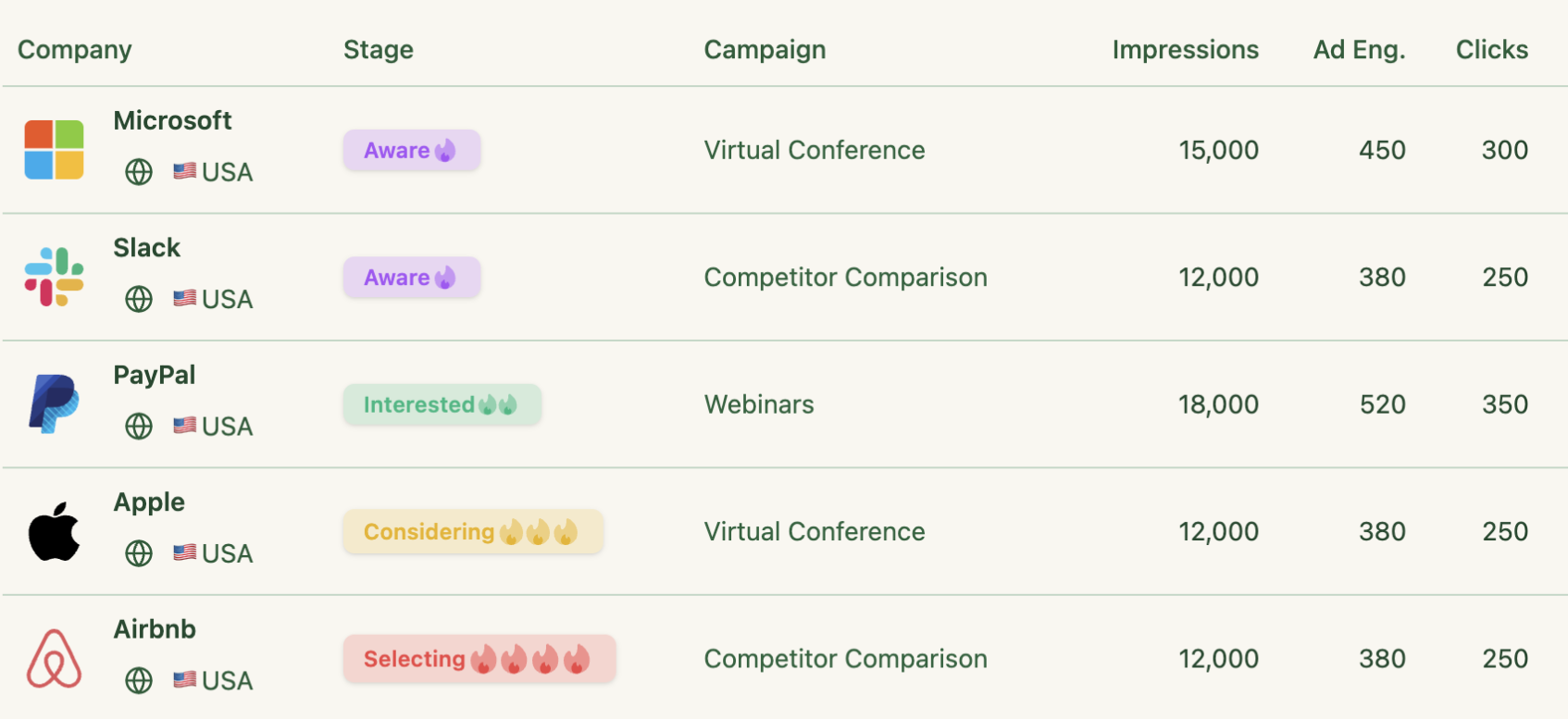
ZenABM tracks company-level ad engagement for each campaign so marketing teams and the sales team get a unified view of account based marketing progress:
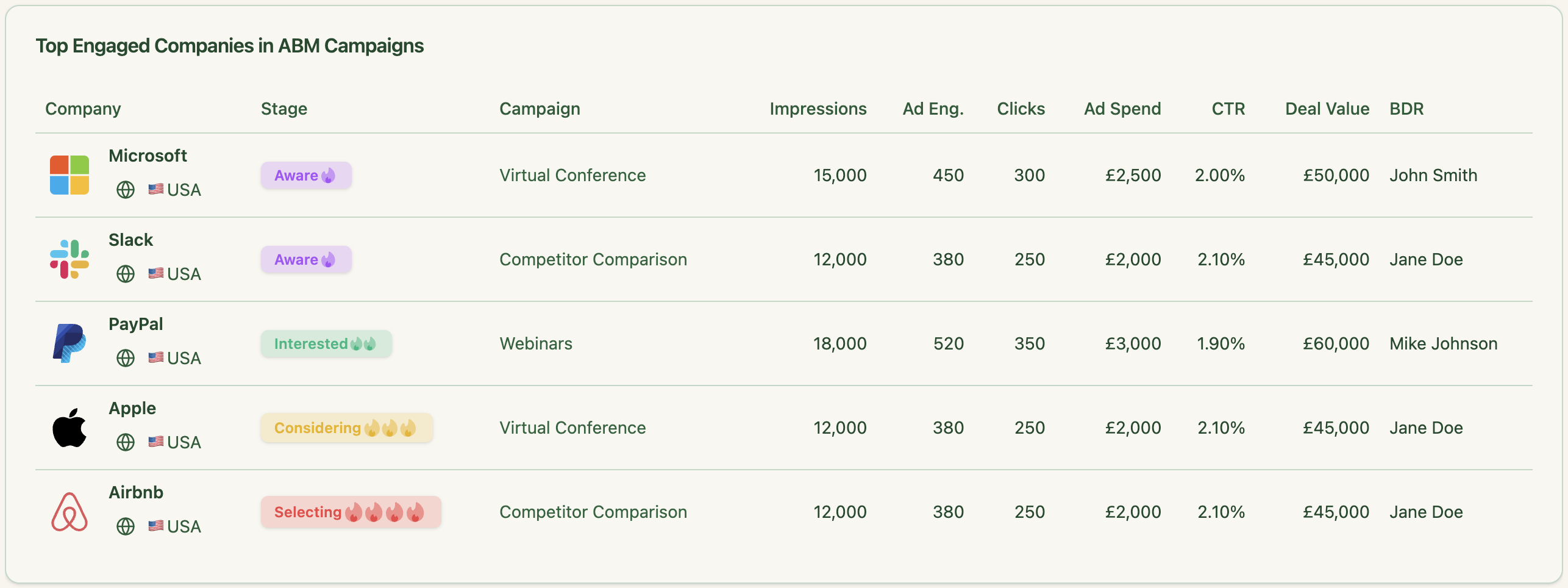
It matches ad-engaged companies to CRM deals and builds dashboards for pipeline and revenue influence at key accounts and high value accounts.
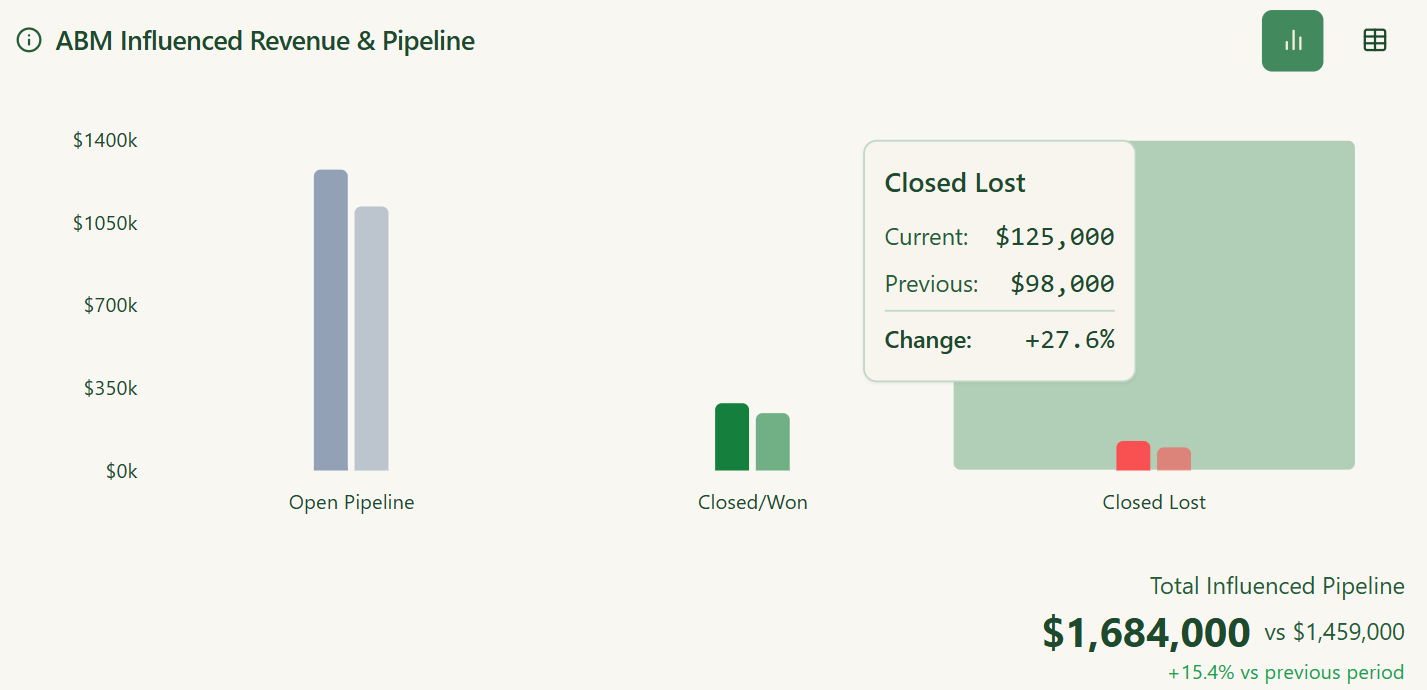
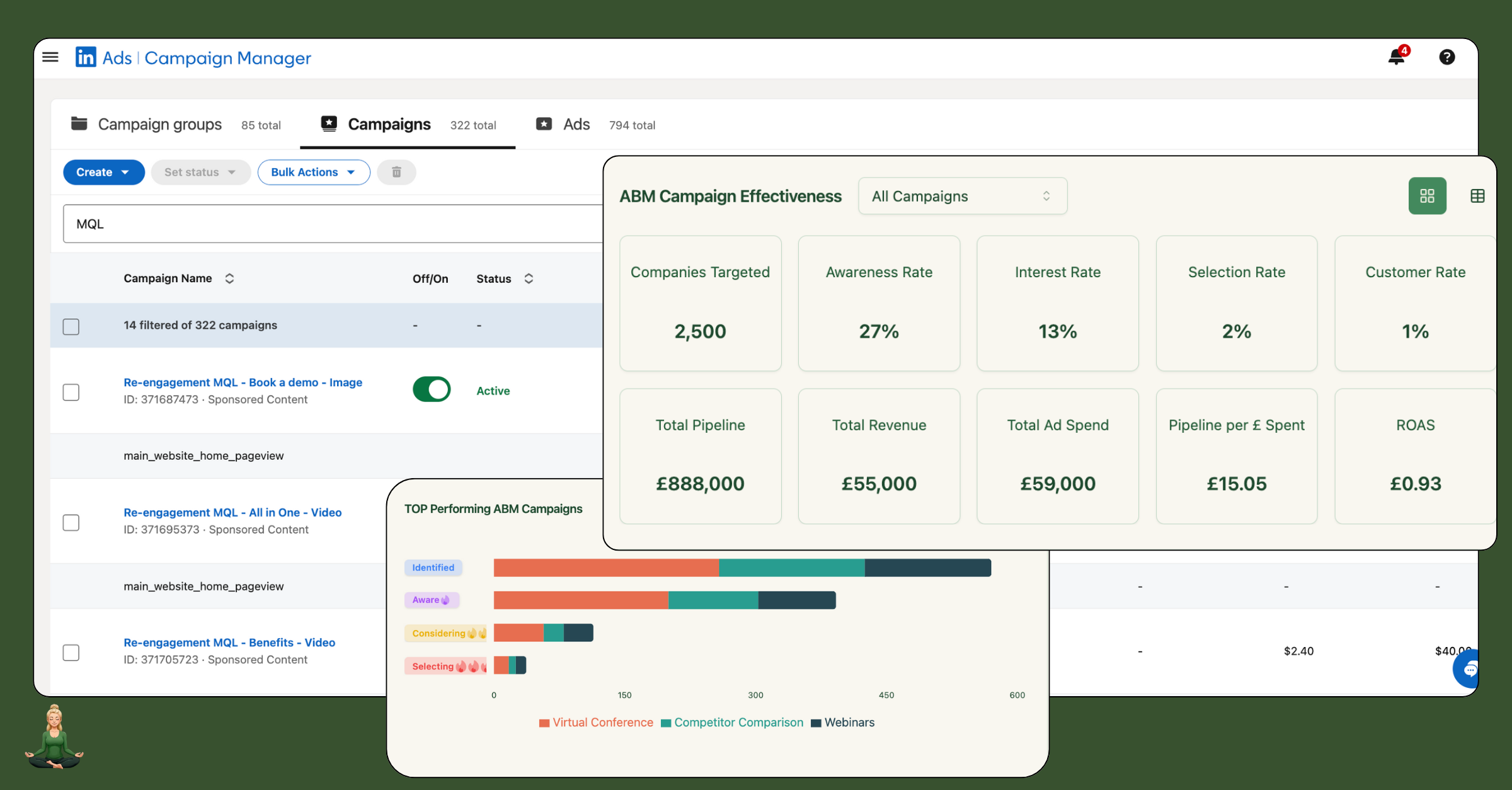
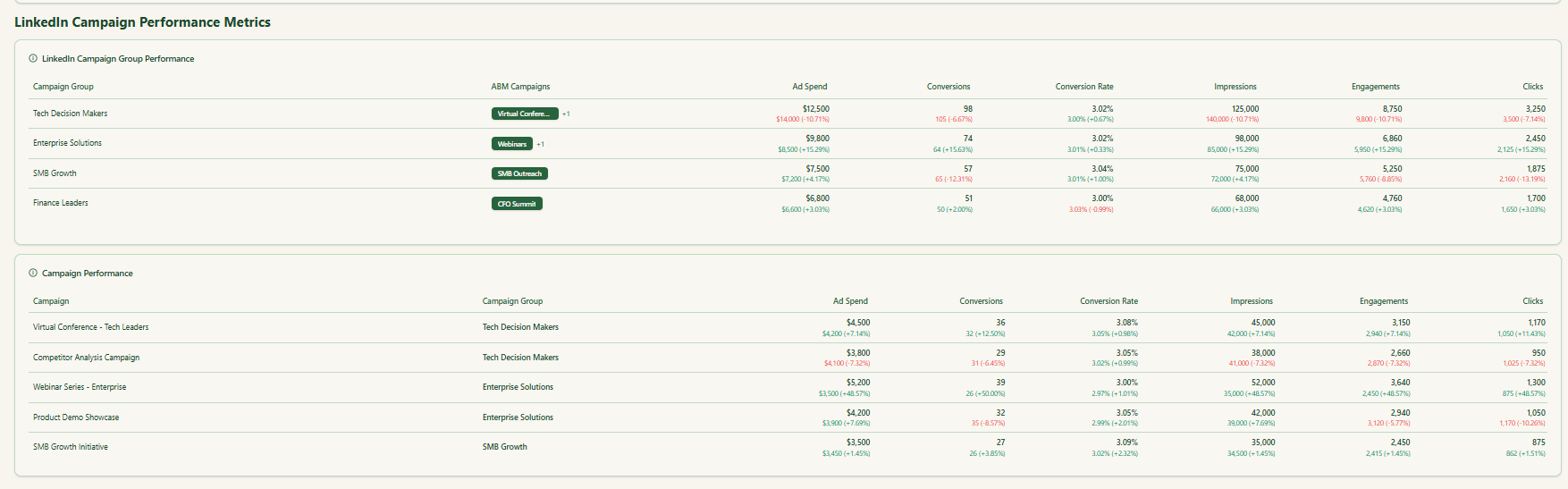
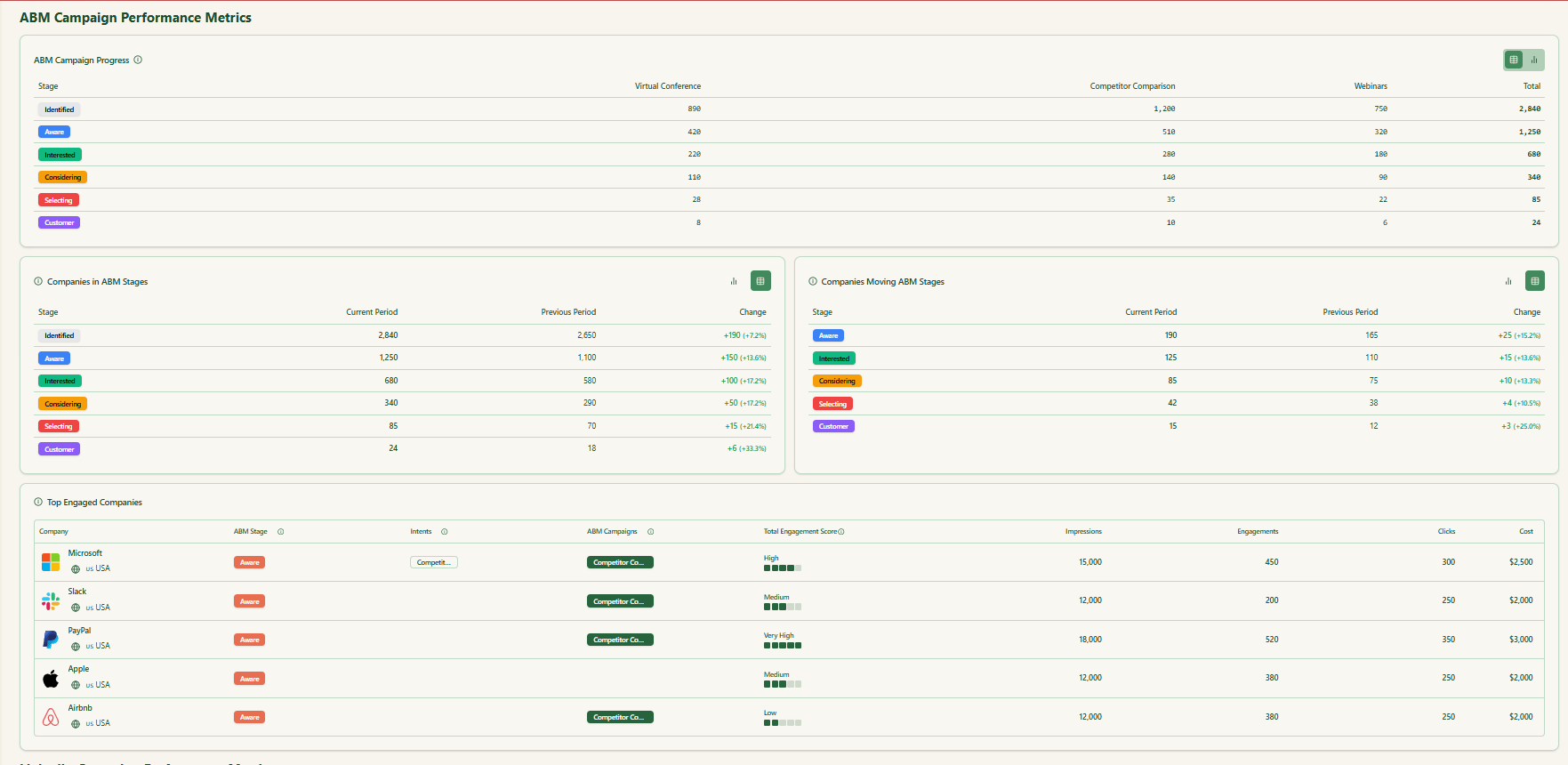
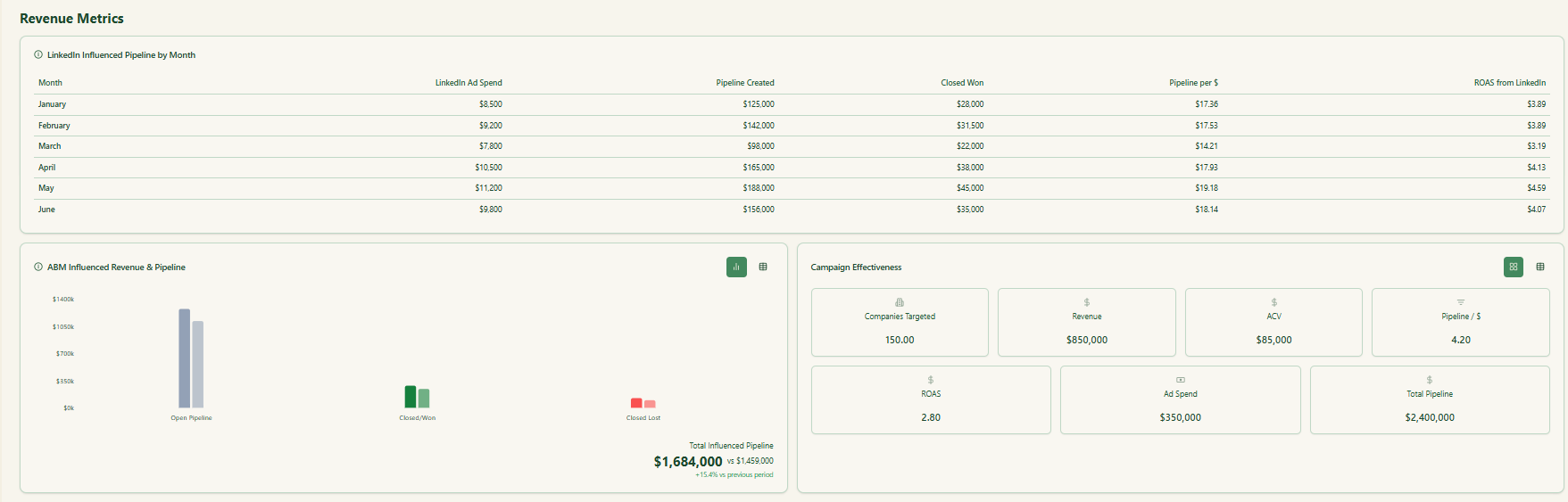
It also tracks movement through ABM stages so you can see velocity and friction points across target accounts and high value accounts.
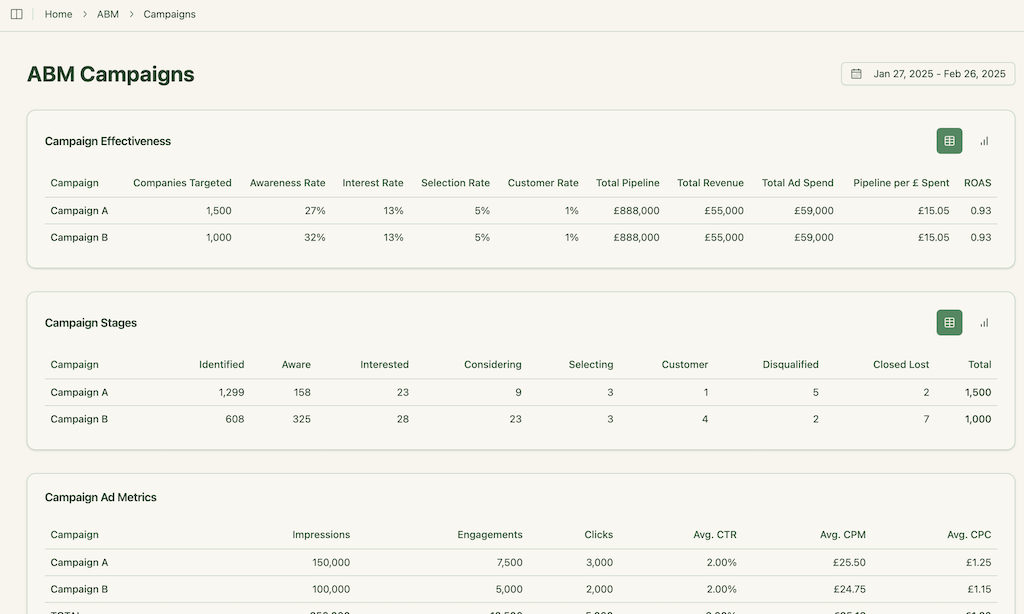
Measurement is not an after-party. Watch accounts move through stages, find drop-offs, and fix them with a consistent account-based marketing strategy.
Emilia Korczynska, VP of Marketing at Userpilot, admits she made plenty of missteps during her first account-based marketing push. She course-corrected and later documented the lessons so you do not repeat them.
Old lead-gen habits die hard. Teams set goals like “100 MQLs” or chase webinar signups, then confuse a single contact with true account intent. Flip to account engagement. Track advancement from Interested → Considering → Selecting → Closed-Won, inspired by Kyle Poyar’s ABX framework.
Here is the adapted staging the team used:
Standard attribution ties revenue to a single contact and under-credits account-based marketing, especially on LinkedIn, where influence often happens without clicks.

Go account-level. Track impressions, engagements, and clicks by company. ZenABM pulls company data from LinkedIn’s API so you see the true lift of your account-based marketing tactics.
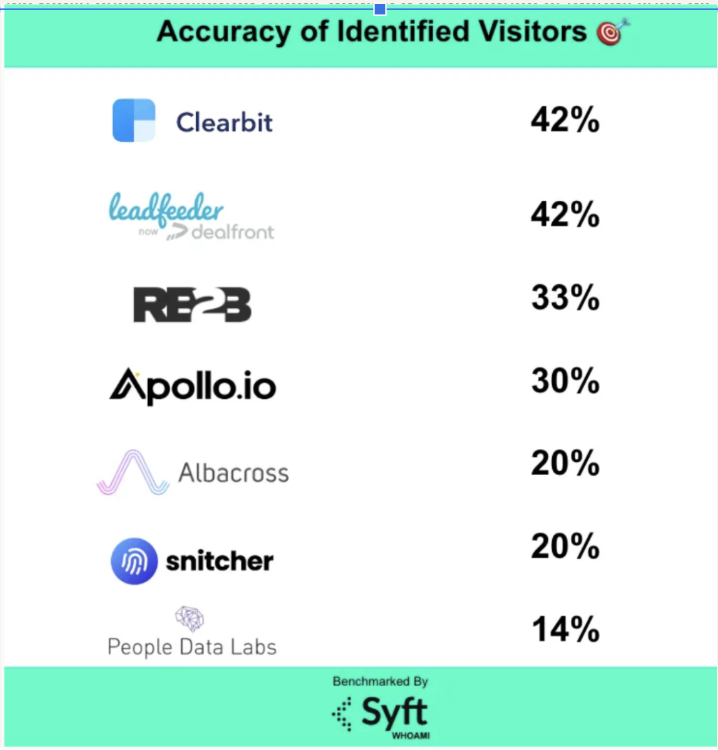
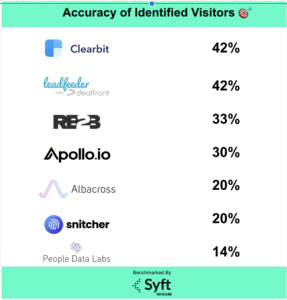
Tools do not fix a weak strategy. Many suites rely on IP matching or proprietary networks. Only a small share of companies self-identify IPs, and remote work reduces accuracy. Syft’s study puts visitor identification at about 42%.
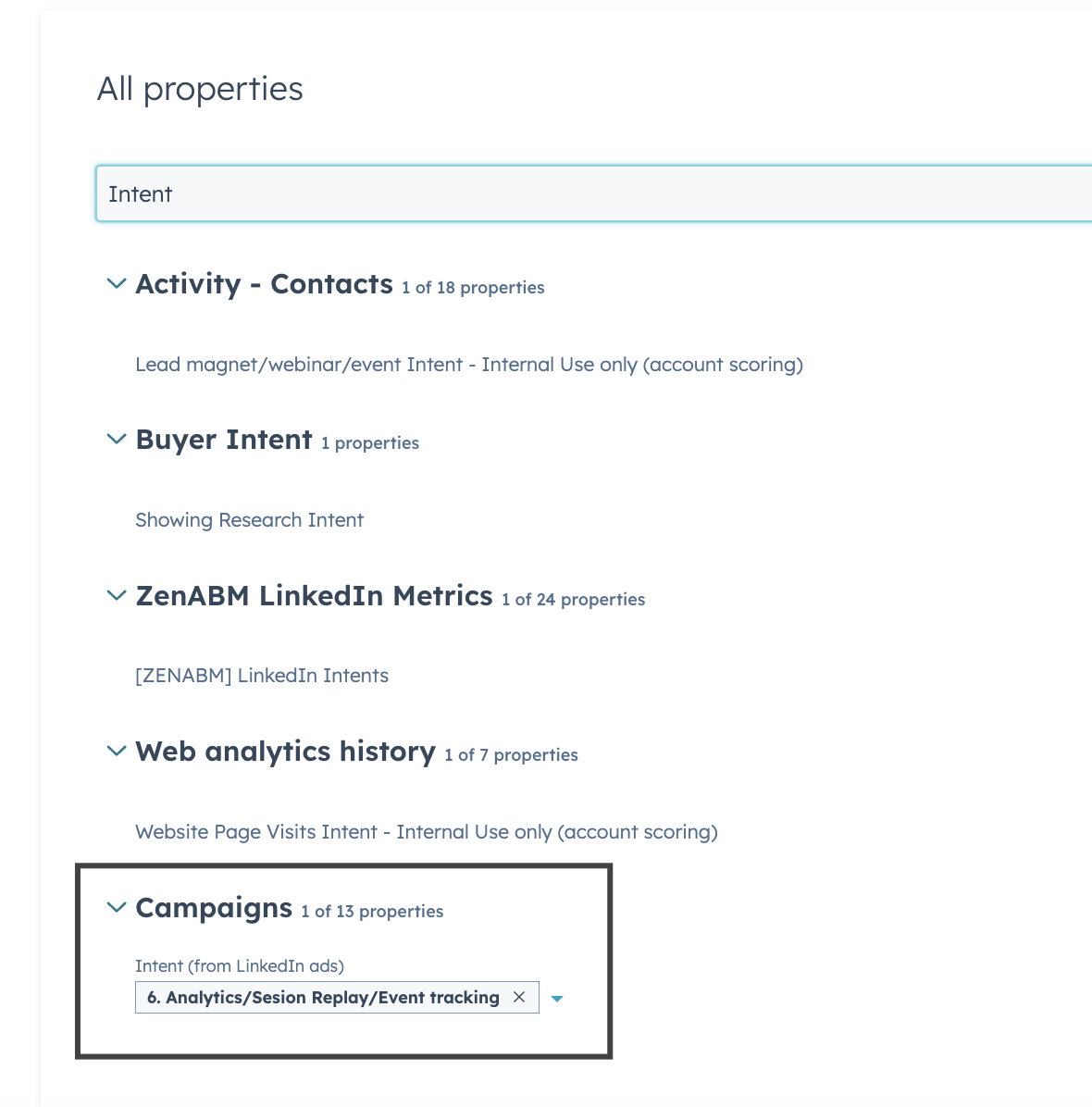
Skip unreliable deanonymization. Use LinkedIn engagement signals and qualitative intent for scoring and BDR plays. ZenABM was built to push both metrics and intent into your CRM for target accounts:
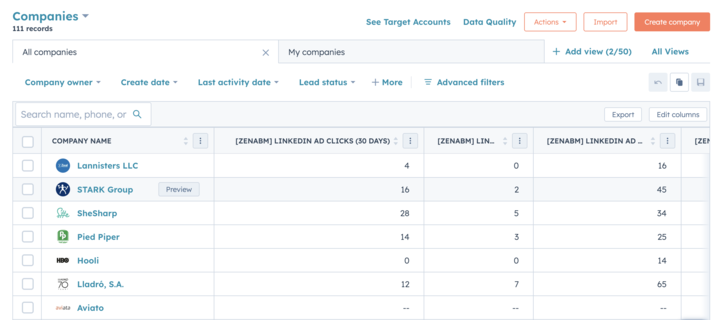
Winning over unreachable execs means ditching generic playbooks. Use surgical targeting, research-backed personalization, multi-channel precision, and value-led outreach. Tools like ZenABM keep you honest by showing which target accounts are truly moving through the funnel so sales and marketing teams can coordinate marketing efforts on high value accounts.